
Car Sponge Supplier Guide: Everything You Should Know

Finding the right Car Sponge Supplier is important for businesses that sell automotive cleaning products, operate car-detailing services, manage vehicle-care shops, or distribute cleaning supplies to retailers. A quality supplier can influence everything from product performance and durability to pricing, packaging, delivery, and customer satisfaction. Whether you're sourcing sponges for a small business or planning larger wholesale orders, understanding what to look for can help you make a more informed purchasing decision.
What Is a Car Cleaning Sponge?
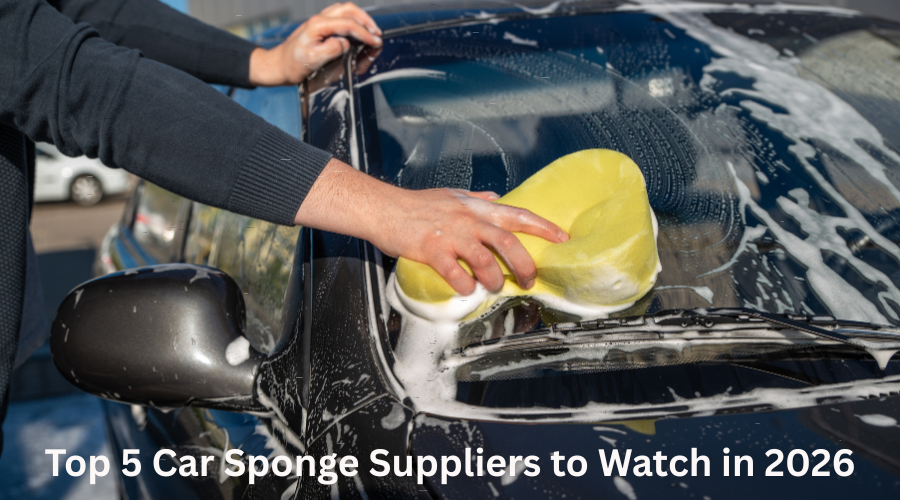
A car cleaning sponge is a simple but useful tool designed to help remove dirt, dust, grime, and other surface contaminants from a vehicle.
While the basic concept sounds straightforward, automotive sponges can differ significantly in their material, texture, density, absorbency, shape, and intended use.
Some are designed for general washing, while others may be better suited for applying cleaning products, wiping specific surfaces, or handling detailing tasks.
The right sponge should make cleaning easier without creating unnecessary risks for the vehicle's finish.
That is particularly important when dealing with painted surfaces, glass, wheels, dashboards, and other areas that require different cleaning approaches.
Why Car Sponge Quality Matters
It can be tempting to treat a car sponge as an inexpensive commodity and choose whichever product has the lowest price.
However, poor-quality cleaning tools can create several problems.
A sponge that breaks apart quickly may need frequent replacement. One that doesn't absorb enough water may make washing less efficient. A rough or poorly manufactured surface could potentially cause unwanted marks when used incorrectly.
For businesses, these issues can become even more significant because customers expect automotive cleaning products to perform consistently.
Product quality affects both user experience and brand reputation.
If you're purchasing sponges in bulk, the difference between a dependable product and an inconsistent one can become noticeable very quickly.
Different Types of Car Sponges
Before choosing a supplier, it's useful to understand the different types of products available.
Standard Washing Sponges
Traditional car washing sponges are generally designed for applying water and car shampoo across exterior surfaces.
They tend to be simple, affordable, and suitable for general cleaning.
For retailers and distributors, standard washing sponges can be an attractive product because they appeal to a broad range of vehicle owners.
Microfiber Sponges
Microfiber-based cleaning products are designed around very fine synthetic fibers.
Depending on their construction, they can be used for washing, wiping, drying, or detailing.
Microfiber products are often marketed toward users who want a softer cleaning experience and more specialized detailing performance.
Wax Application Sponges
Some sponges are specifically designed for applying waxes, polishes, dressings, or other automotive-care products.
These products may have a softer or more controlled surface that helps distribute a product evenly.
A supplier should be able to explain the intended application of each sponge rather than treating all products as interchangeable.
Wheel and Tire Cleaning Sponges
Wheels and tires can accumulate particularly stubborn contaminants, including road grime and brake dust.
Sponges designed for these areas may use different shapes, densities, or materials to make it easier to clean around curved surfaces and difficult-to-reach areas.
Because wheels and tires can be dirtier than painted body panels, businesses may want to offer separate cleaning tools for these applications.
What to Look for When Choosing a Supplier
Once you've identified the type of sponge you need, the next step is evaluating potential suppliers.
Material Quality
The material is one of the most important factors affecting sponge performance.
Ask suppliers what material is used, how it is manufactured, and whether the material is consistent across production batches.
Important characteristics may include:
Absorbency
Softness
Density
Durability
Resistance to tearing
Water retention
Surface texture
Ease of cleaning
The right characteristics depend on the sponge's intended purpose.
A sponge designed for applying wax may have different requirements from one designed for heavy-duty exterior washing.
Size and Shape
Sponge dimensions can affect how comfortable and effective the product is to use.
A larger sponge may cover more surface area with each pass, while a smaller sponge may be easier to control in tight spaces.
Shape is also important.
Some automotive sponges are rectangular, while others have curved edges, ergonomic designs, or specialized shapes for wheels and detailing.
If you're selling the products under your own brand, discuss available sizes and shapes with the supplier before finalizing the order.
Absorbency
A good washing sponge should hold an appropriate amount of water and cleaning solution.
However, maximum absorbency isn't necessarily the only goal.
The ideal level depends on the intended application and the sponge's material.
Ask suppliers about absorbency testing and whether they maintain consistent product specifications between production batches.
Durability
Durability matters particularly for professional users.
A detailing business may use cleaning sponges repeatedly throughout the day, so products that quickly deteriorate can increase operating costs.
For retail products, durability can also affect customer satisfaction.
A sponge that remains functional through repeated use is more likely to create a positive experience than one that falls apart after a few washes.
Manufacturing Standards and Quality Control
A supplier's manufacturing process can tell you a lot about the consistency of its products.
Ask how the company controls quality during production.
Depending on the product, quality checks might include:
Material inspection
Dimensional checks
Density testing
Absorbency testing
Visual inspection
Compression testing
Packaging inspection
Batch consistency checks
The exact testing process will depend on the sponge's material and intended use.
If you're placing a large order, consider requesting samples before committing to full-scale production.
Testing a physical sample gives you an opportunity to assess texture, size, absorbency, durability, and overall finish for yourself.
OEM and Private Label Car Sponges
If you're building your own automotive-care brand, you may want more than generic products.
Many manufacturers offer OEM or private-label services, allowing businesses to sell products under their own branding.
Depending on the supplier, customization may include:
Product color
Logo printing
Packaging design
Labels
Sponge dimensions
Product shape
Retail packaging
Product bundles
Private-label sourcing can help businesses create a more recognizable product line.
However, customization often involves minimum order quantities and additional setup costs.
Ask for a complete quotation that includes customization fees rather than focusing only on the base product price.
Understanding Minimum Order Quantities
Minimum order quantity, or MOQ, can significantly affect your purchasing strategy.
Some suppliers may accept small wholesale orders, while others specialize in high-volume production.
If you're a new business, ordering a very large quantity may tie up money in inventory before you've established demand.
Before placing an order, ask:
What is the minimum quantity?
Does the MOQ apply per color?
Does it apply per size or product type?
Is custom packaging subject to a separate MOQ?
Can different products be combined within one order?
Getting clear answers early can help you plan your budget more effectively.
Pricing: Look Beyond the Unit Cost
Price is obviously important, but the lowest unit price isn't necessarily the best overall deal.
Consider the total cost of sourcing the product.
This may include:
Product cost
Customization charges
Packaging
Shipping
Insurance
Import duties
Taxes
Warehousing
Local delivery
Inspection fees
A slightly more expensive sponge may provide better durability or consistency, potentially reducing replacement rates and customer complaints.
For businesses, it's often more useful to compare the total landed cost and expected product performance than simply comparing supplier quotations.
Packaging Options
Packaging can be particularly important for retailers.
A product may be sold individually, in multipacks, or in bulk packaging depending on the intended market.
Ask suppliers what packaging options they offer and whether they can customize the packaging for your brand.
You may want to consider:
Individual packaging
Retail-ready packaging
Hanging packages
Multipacks
Bulk cartons
Printed labels
Custom boxes
Packaging should also protect the sponge from contamination, moisture, crushing, and other issues during storage and transportation.
Shipping and Delivery Considerations
When purchasing products in bulk, delivery can be just as important as product quality.
A supplier that consistently misses delivery schedules can create inventory problems for your business.
Ask about:
Production lead time
Shipping methods
Estimated transit time
Packaging standards
Shipment tracking
Minimum shipping quantities
International shipping experience
If you're importing from another country, make sure you understand the shipping terms and which party is responsible for transportation, insurance, duties, and other costs.
After-Sales Support
Good supplier relationships don't end when the shipment arrives.
Before placing an order, understand how the supplier handles product complaints, quality issues, shortages, and damaged shipments.
Ask about their:
Return policy
Replacement policy
Warranty, if applicable
Quality claims procedure
Customer service process
Response times
A supplier that communicates clearly when something goes wrong can be much easier to work with over the long term.
How to Test a Car Sponge Before Buying in Bulk
A sample evaluation can help you avoid expensive mistakes.
When you receive samples, test them under realistic conditions.
Check how the sponge feels in your hand and how it performs with water and automotive cleaning products.
Look for:
Texture: Is it appropriate for the intended surface?
Absorbency: Does it hold and release water effectively?
Durability: Does it remain intact after repeated use?
Handling: Is it comfortable to grip?
Cleaning: Is it easy to rinse after use?
Consistency: Do multiple samples perform similarly?
If you're sourcing several suppliers, test their samples under the same conditions. This makes your comparison more meaningful.
Common Mistakes to Avoid
Choosing a supplier based entirely on price is one of the most common mistakes.
Another is placing a large order without testing samples first.
Businesses can also run into trouble when they fail to confirm product specifications in writing.
Other issues include:
Ignoring minimum order quantities
Overlooking shipping costs
Not checking packaging quality
Failing to discuss replacement policies
Ordering products without clear specifications
Choosing a supplier with poor communication
Not planning sufficient inventory
A little research before placing the first major order can prevent many of these problems.
Questions to Ask Before Choosing a Supplier
Before committing to a supplier, consider asking:
What material is the sponge made from?
Understanding the material helps you determine whether the product is appropriate for your intended use.
Can you provide samples?
A sample allows you to evaluate quality before purchasing in bulk.
What is your minimum order quantity?
This helps you determine whether the supplier fits your purchasing volume.
Can you provide private-label packaging?
If you're building a brand, this may be an important requirement.
How do you control product quality?
Ask about inspection and testing procedures.
What are your production and delivery times?
This helps you plan inventory.
How are quality complaints handled?
A clear process can protect your business if an order doesn't meet the agreed specifications.
FAQs
What should I look for in a supplier of car sponge?
Focus on material quality, product consistency, pricing, MOQ, customization options, packaging, delivery reliability, and customer support. The right combination depends on your business model and target customers.
Can I order car sponges with my own logo?
Many manufacturers offer private-label or OEM services. Available customization options and minimum quantities vary between suppliers.
Should I request samples before ordering?
Yes. Testing samples can help you evaluate absorbency, softness, durability, size, and overall quality before committing to a larger purchase.
Are cheaper car sponges always a good choice?
Not necessarily. A low purchase price may be offset by poor durability, inconsistent quality, or higher replacement costs. Consider the total cost and expected performance.
What packaging options are available?
Depending on the manufacturer, you may be able to choose from individual packaging, multipacks, bulk cartons, custom labels, and branded retail packaging.
How can I compare multiple suppliers?
Create a comparison table covering unit price, MOQ, material, customization, packaging, production time, shipping, quality control, and after-sales support. This makes it easier to compare suppliers using the factors that matter most to your business.
Conclusion
Choosing the right supplier of car sponge requires more than comparing prices. Material quality, absorbency, durability, product consistency, customization, packaging, MOQ, shipping, and after-sales support can all affect the success of your purchase. Whether you're stocking an automotive retail store, supplying a detailing business, or developing your own car-care brand, start by defining your requirements and testing samples from potential suppliers. Compare the complete cost rather than only the unit price, confirm specifications in writing, and choose a supplier that can consistently meet your expectations. With careful sourcing and a clear understanding of what to evaluate, you can build a reliable supply chain and offer customers automotive cleaning products they can use with confidence.


Comments